
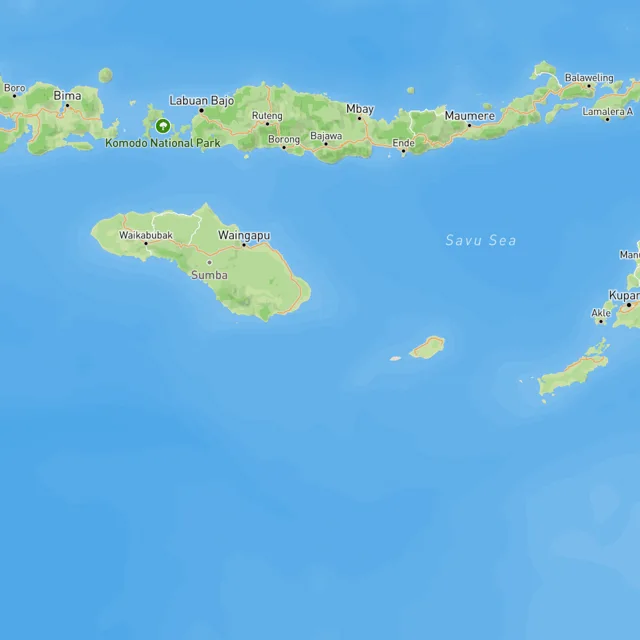

East Nusa Tenggara is a reef-heavy corner of eastern Indonesia where the surf runs off coral setups that catch swell from the southwest through west. Nearly every wave here breaks over reef, so the region rewards surfers comfortable reading a coral bottom and timing their sessions rather than those hunting soft, forgiving beach peaks.
The swell window is consistent in direction: lines march in mostly from the southwest and west, with a west-southwest push feeding most of the coast and only a couple of spots picking up more southerly angles. That gives the region a clear personality during the main groundswell months, when long-period energy from the Indian Ocean reaches this part of Indonesia. Wind matters as much as swell, and the cleanest conditions tend to line up under easterly airflow, whether from the northeast, southeast, or straight east, which grooms the reefs and holds the faces open.
Most breaks work best around mid tide, though plenty stay rideable across high and low water too, so tide is rarely the limiting factor once the swell and wind cooperate. Size expectations sit in a practical range: many spots start showing their shape around waist-to-chest-high surf and hold cleanly up into well-overhead conditions, with a handful of heavier reefs built for double-overhead days.
This is largely an intermediate-to-expert region. The majority of setups suit confident intermediates, a strong group are genuinely expert-only, and only a couple lean beginner-friendly, so newer surfers should choose their days and spots carefully and lean on local knowledge. Notable spots include Boa, Do'o, and Five-O, which give a sense of the coral-reef variety on offer.
For orientation, the surf is spread across small coastal communities rather than one central hub. Towns like Sai anchor a couple of nearby breaks, while Kandora, Kolala, Labarohi, and Malaikababa each sit near their own reef. That scattered layout is part of the appeal of surfing in East Nusa Tenggara: it stays quiet and exploratory, but it also means access and timing take planning, and having a way to move between zones helps you follow the best mix of swell direction and wind.
Put simply, come here for steady southwest-to-west swell, reef waves that reward wave-reading, and cleaner sessions when easterly wind meets a mid-tide push. It suits intermediate and advanced surfers most, with just enough gentler options to keep it interesting for those still building reef confidence.