
Saint Barthélemy is a compact Caribbean island where the surf turns on when swell arrives from the north and east, breaking mostly over reef in a scattering of sheltered coves and headlands. It is a winter-leaning wave: north and northeast groundswell pushing down toward the Lesser Antilles is what lights up the island's exposed northern and eastern shores.
Almost every setup here is a reef break, with a lone point adding variety for anyone chasing a longer wall. Bottoms range from uneven reef to sections of dead and live coral, so booties and a careful read of the lineup pay off. The waves want size to show their best: most spots need at least waist-to-chest-high swell before they start working, and they hold up into the head-high-plus range before they get unruly.
The best swell window runs north through east, from north and north-northeast around to east and east-northeast, which is why the island fires most reliably during Atlantic winter swells. Offshore winds tend to come from the southwest, with some spots also cleaning up on southeast or southerly flow, a natural fit for these north-facing bays. Tides are forgiving; most breaks work through low, mid, and high, so timing is more about swell and wind than the clock.
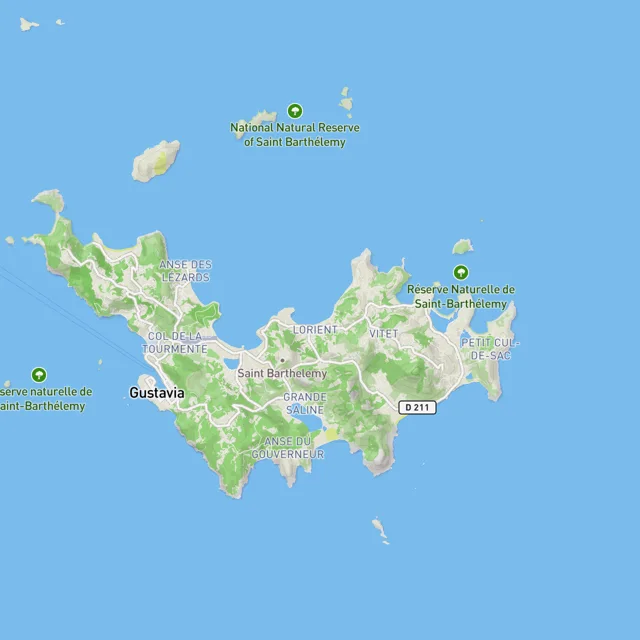
The surf clusters around a handful of towns. Quartier de Lorient holds the most options, with more waves spread across Anse des Flamands, Grand Cul-de-Sac, Marigot, and Quartier du Roi. Among Saint Barthélemy surf spots, notable names include Anse des Cayes, Anse des Lézards, and La Tortue, which hint at the variety on offer between the calmer bays and the more exposed reefs.
This is not a beginner's island at heart. Most spots suit intermediate surfers who are comfortable over reef, and several of the heavier reefs and the point are firmly expert territory, needing more swell and a confident approach. There is a beginner-friendly option in the mix, but newcomers should choose their day carefully and stick to the smaller, cleaner conditions.
The short version for planning a session: watch for a north-to-east swell with enough size to wrap into the reefs, hope for a southwest offshore, and be ready to move between coves as the direction shifts. When those pieces line up, Saint Barthélemy delivers clean, rewarding reef waves for surfers who know how to handle them.