
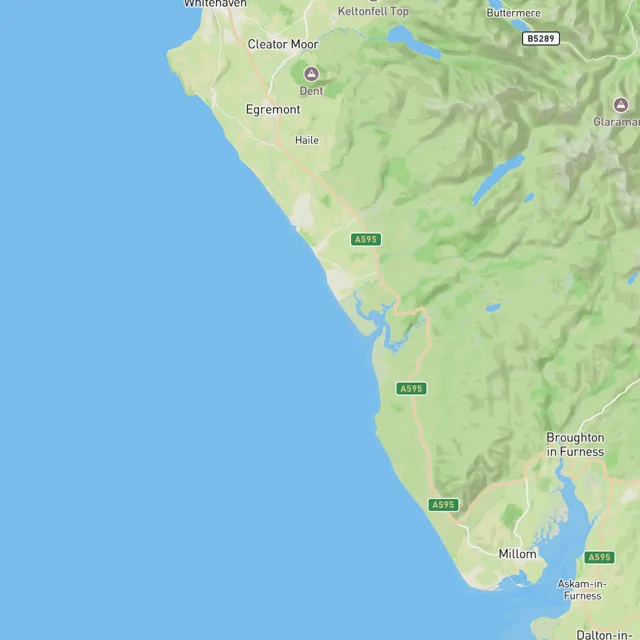

Cumberland sits on the northwest coast of England, where a west-facing shoreline meets the Irish Sea and picks up the swell that makes this corner of Cumbria worth watching. Surf here depends on the Irish Sea rather than open Atlantic groundswell, so the best waves tend to arrive with strong west or southwest winds and through the cooler months of autumn and winter, when low-pressure systems track across the region.
The coastline is compact but varied, anchored by two main areas. St Bees, built around the red sandstone headland of St Bees Head, offers some shelter and shape depending on wind and tide. To the south, near Whicham, the long beach at Silecroft opens onto a wide, exposed foreshore that catches more swell when the sea is up. Between them you get a useful spread: somewhere more protected when it is blowing hard, and somewhere more open on smaller days.
For anyone learning, the gently shelving beach at Silecroft is the more forgiving option when the surf is small, while St Bees rewards surfers who can read the way the headland handles wind and tide. Surf spots in Cumberland stay low-key, which is part of the appeal for anyone who likes room to move around a lineup.
When you check a forecast, look for a solid west-to-southwest swell paired with lighter offshore winds, and be ready to shift between St Bees and Silecroft depending on size and direction. Cumberland will not turn on every day, but when the Irish Sea lines up, this coastline can deliver clean, rideable waves that reward the surfers who keep an eye on it.