
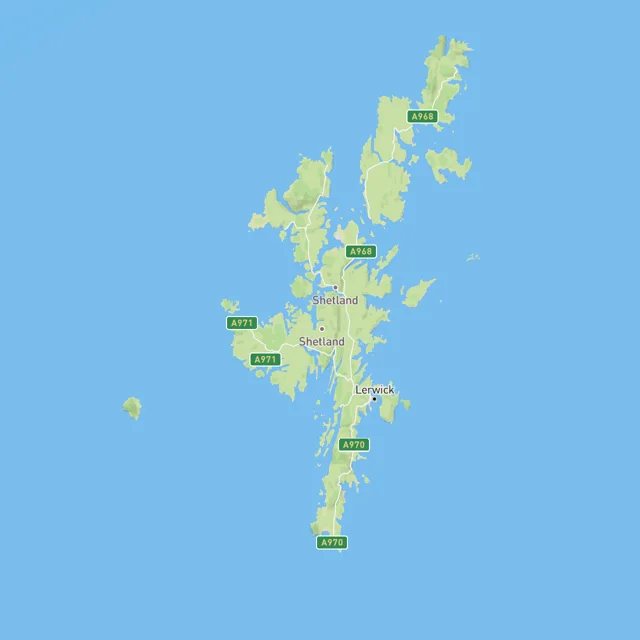

The Shetland Islands offer North Atlantic surf across the UK's most northerly coastline, where scattered beaches and bays face open ocean in almost every direction. This remote archipelago sits well north of the Scottish mainland, caught between the North Atlantic and the North Sea, so different coves come alive depending on where the swell is running.
With only a handful of surfable breaks spread across the islands, the appeal is variety and space rather than one marquee wave. Spots sit near small settlements such as Belmont, Brecks, Sandness, and Sandwick, each holding its own beach or bay. Because the coastline wraps around headlands and inlets, you can often find a sheltered corner when one aspect is blown out, which makes reading the wind as important as reading the swell.
Notable spots include Breckon, Gulberwick, and Melby, and the gaps between them show how spread out surfing in Shetland Islands really is. You travel between breaks, checking which aspect is catching clean waves on the day rather than relying on a single dependable peak.
Forecasting here comes down to matching swell direction to coastline aspect and then finding shelter from the wind. Open, ocean-facing beaches pick up the most energy, while more enclosed bays give you calmer options when it is big or stormy. Tides matter too, so check the state of the tide against each beach before committing to the drive across the islands.
Autumn and winter deliver the most consistent North Atlantic swell, along with short daylight hours and genuinely cold water, so a proper winter wetsuit with boots, gloves, and a hood is essential. Summer is milder and quieter but far less reliable for waves. Whenever you go, expect uncrowded lineups and a real chance of having a beach to yourself.
Beginners will find the gentler bays near the main towns the most forgiving places to start, while the more exposed beaches suit surfers comfortable with bigger, colder, and more powerful conditions. Come ready for fast-changing weather, plan your session around the wind, and treat Shetland as a place to explore spot to spot rather than tick off a single break.