
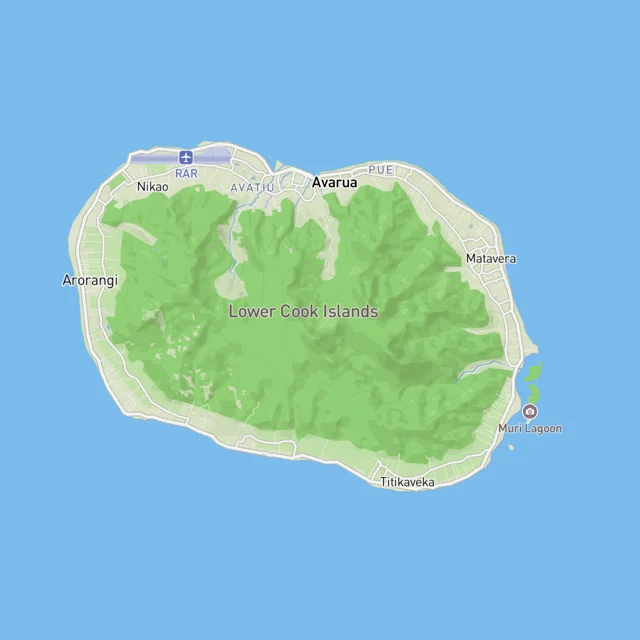

Rarotonga is the main island of the Cook Islands, and its surf is defined by reef breaks that ring the coast over live coral. Because the island sits alone in open Pacific water, swell can reach it from almost any direction, so the working side shifts with each system: northern and eastern swells light up one stretch of coast while southern groundswell turns on another. That variety is the appeal, but it also means checking more than one zone before you paddle out.
Every break here fires over coral reef, which sets the tone for who should surf and when. These are not sandy beginner beaches. Most spots reward experienced surfers who are comfortable over shallow reef, with only a couple leaning toward the intermediate end. The reef also wants water on it: high tide is the reliable window across the island, and several spots come alive through mid tide too, so timing a session around a fuller tide is usually the safest call.
Size matters just as much. The reefs generally need a solid pulse to break properly, so look for swell around four feet and up, with the better days climbing into the six-to-eight-foot range before conditions turn heavy. Lighter swells often leave the passes flat. For wind, a southwest breeze tends to groom the more exposed setups, while northeast wind suits others, another reason the island rewards surfers who move around rather than committing to a single spot.
The Rarotonga surf spots cluster around a few areas. Avarua, the main town on the north coast, holds the largest concentration of breaks, including Avarua Harbour. The west side around Arorangi District offers its own reef options, and Nikao adds another. On the south and east coasts, passes such as Avaavaroa Passage and Avana show how swell wraps around the island to feed different exposures. Notable spots include Avaavaroa Passage, Avana, and Avarua Harbour, though the right choice on any given day depends on where the swell and wind are pointing.
For visiting surfers the takeaway is straightforward. Rarotonga is a reef-pass destination best suited to confident surfers, at its best on a decent swell and a higher tide. Read the swell direction to pick your coast, favor the tide window, and respect the coral underfoot.