
The Galápagos Islands sit roughly 1,000 kilometers off mainland Ecuador in the eastern Pacific, and their surf is defined by volcanic reef breaks that fire on both northern and southwest swells. Most waves here break over uneven reef, so this is largely an intermediate-and-up destination, with a handful of expert-only setups and a single gentle beach option for beginners.
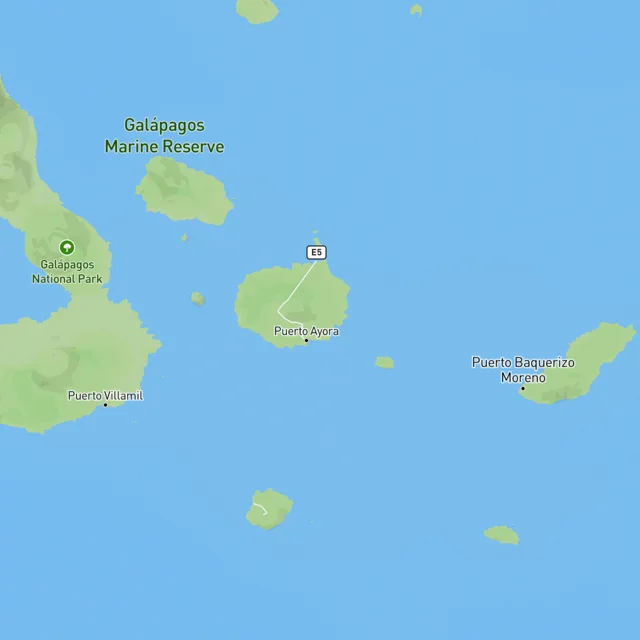
Surfing in Galápagos centers on a few island hubs. Puerto Baquerizo Moreno on San Cristóbal has the highest concentration of breaks, while Puerto Ayora on Santa Cruz, the Seymour area, and Puerto Villamil on Isabela round out the spread. Notable spots include Aeolian Cove, Bahia Tortuga, and Barahona. Spreading your options across islands means you can usually find a working corner depending on the day's swell angle and wind.
Swell arrives from two main windows. Through the southern-hemisphere winter, south and southwest energy pushes into the archipelago, while the northern winter delivers north through northwest swell. That dual exposure keeps the islands surfable across much of the year, even if size and quality swing with each pulse. Most reefs want something from waist-high and up, roughly 0.9 meters, and the stronger setups hold shape when the surf jumps well overhead.
Wind is the daily variable to track. The prevailing offshore is from the southeast, with northeast and easterly winds also grooming certain reefs, so dawn sessions before the breeze builds are usually the smart play. Tides are forgiving: most spots work through low, mid, and high, giving you a wide window to score once swell and wind cooperate.
By ability, the reefs and slabs around San Cristóbal suit confident intermediates and experts comfortable over uneven bottom, and the point breaks add a couple of longer, more directional walls that favor west and southwest swell. Beginners have the fewest choices, but the sand-bottomed beach break is the mellower, smaller-wave pick when the south swell stays modest.
The move here is to match the island and break to the day: read the swell direction, surf early before the wind turns, and lean on the broad tide window to line up your session.