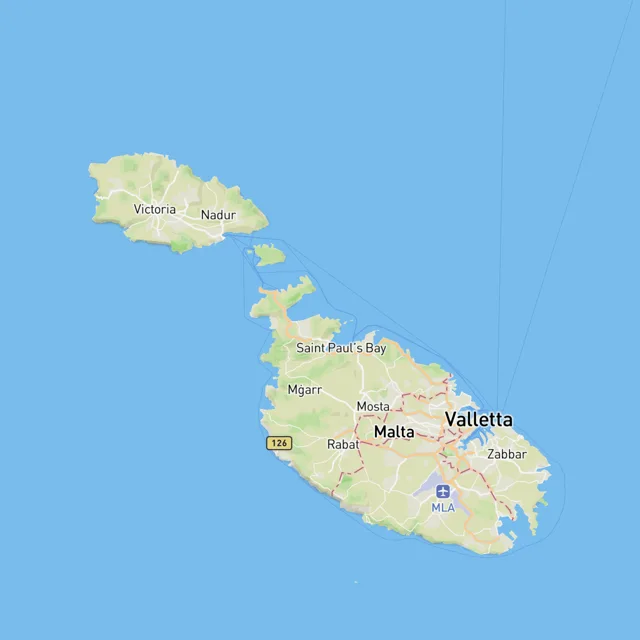

Surfing in Malta means chasing Mediterranean wind swell around a compact central-Med archipelago, where a short but varied coastline on the main island and neighbouring Gozo hides a spread of beach and reef breaks. Waves here depend on wind-driven swell rather than long-range groundswell, so the surf tends to switch on with the windier, cooler part of the year and comes and goes with each system.
Most of the surf faces the northern half of the compass. North and northeast swells light up the widest range of spots, with northwest and east swells opening up others, so knowing which way the swell is pointing matters as much as its size. Waves are generally on the small to medium side, often in the waist-to-head-high range, which suits the mellow, approachable character of much of the coast. Tides play only a minor role; most breaks stay rideable across low, mid, and high water, leaving swell direction and wind as the factors worth watching.
Reef breaks slightly outnumber beach breaks, so the mix ranges from forgiving sand-bottom bays to sharper reef setups. That spread is reflected across the regions. On the main island's northwest, the Mgarr area around Għajn Tuffieħa holds sandy beach breaks like Riviera and Gnejna that pick up west and northwest swell and favour beginners. Further north, Mellieha blends beach and reef, with spots such as Golden Bay, Armier, and the town break at Mellieha working on north and northeast swell across beginner and intermediate levels. Around Naxxar and Baħar iċ-Ċagħaq, reef spots like Marley's, Ghallis Rock, and The Pole draw the more experienced crowd on northeast and east swell.
Gozo adds its own scattered options. On the island's north coast, the Zebbug area near Marsalforn and the Salt Pans offers reef waves for intermediate surfers on north and northeast swell, while smaller pockets like Ramla at Xagħra, San Blas at Nadur, and the Inland Sea near San Lawrenz round out the variety. These are narrow, single-spot corners rather than broad zones, so treat them as individual options when the swell suits them.
Overall the country leans beginner-friendly, with a solid share of intermediate reef breaks and only the occasional expert-level wave. A shortboard covers the punchier days, but a longer, more forgiving board earns its keep on the many smaller, gentler swells. To time a session, compare swell size and direction, wind, tide, and each spot's character rather than expecting one reliable coastline-wide setup.