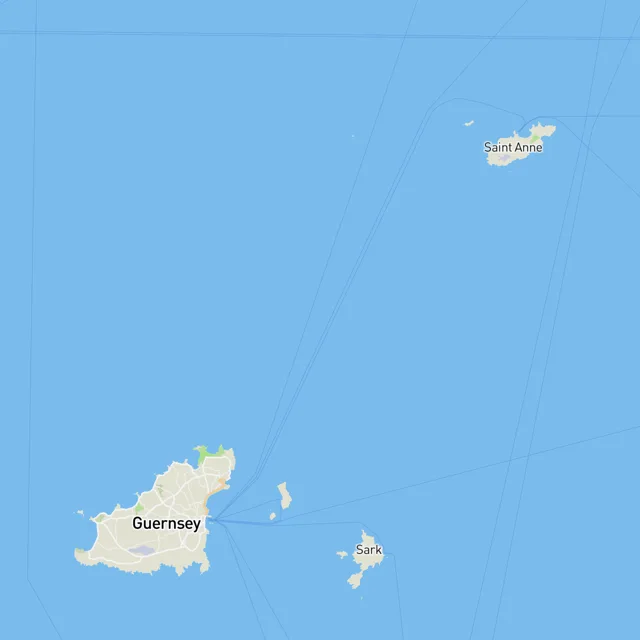

Surfing in Guernsey centres on the exposed western and northern coasts of a small Channel Island group, where beach breaks and reefs pick up Atlantic swell that wraps into the bays. The setup is compact but varied, spread across the main island of Guernsey and the smaller island of Alderney, with surf areas scattered around roughly ten coastal towns.
On Guernsey itself, most of the surf clusters along west-facing bays and northern points. Vazon Bay at Vazon is the broad, sandy centrepiece and a natural reference point, while Fort Le Marchant near Fontenelle and L'Ancresse Bay at L'Ancresse round out the better-known northern options. Break types split fairly evenly between sandy beaches and uneven reef, so the bottom changes noticeably from one bay to the next. A single point break adds some local variety rather than defining the coast.
Alderney sits apart as its own small surf area, with Corblets Bay at Saye Farm and Platte Saline at La Picaterre. Treat it as a separate destination rather than an extension of the Guernsey coastline.
The swell window is wide. Spots draw energy from the north through the west and around to the southwest, which means several different Atlantic systems can light up the coast depending on direction. That width is a real advantage on an island this size. South winds tend to groom the more exposed west-facing breaks, so lighter southerly airflow is often the cleanest.
Tide matters here. Most breaks favour high and mid tide, with only a few working best low, so timing your session around the tide is as important as reading the swell. Rather than chasing a single forecast number, compare swell size and direction, wind, tide window, and each spot's character before you paddle out.
Waves range from small, playful days to more powerful sessions when bigger groundswell arrives, giving beginners gentle bay options and leaving heavier reef for confident, experienced surfers. Bring boards to suit both ends of that range.