
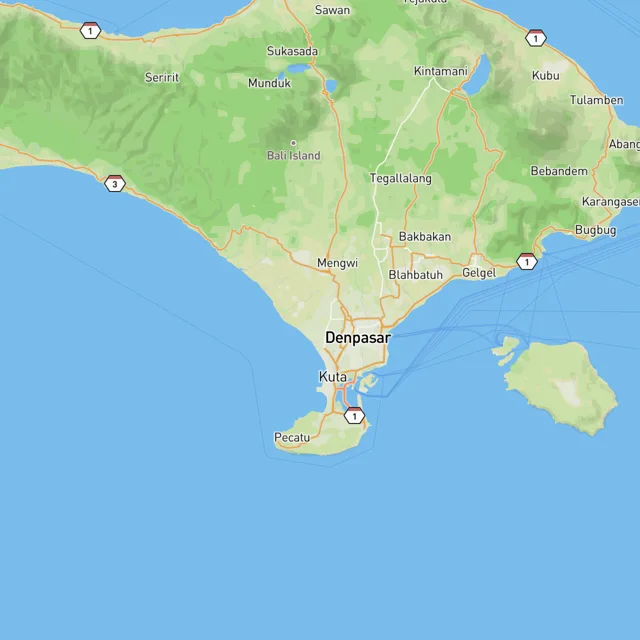

Bali sits at the heart of Indonesia's surf coast, a reef-dominated island where consistent Indian Ocean groundswell wraps into a dense cluster of breaks along its southern and western shores. Most of the surfing here happens over reef, and the swell window points firmly toward the south and west, so the exposed southwestern coastline and the Bukit Peninsula catch the cleanest energy. That mix is why surf spots in Bali run from heavy coral-reef barrels to gentle sand-bottom beach breaks within a short drive of each other.
The bulk of the island's waves break over live and dead coral reef, with a smaller share of sand-bottom beaches and a couple of point setups. Swell arrives most reliably from the south-southwest through west, lighting up the reefs that face open ocean. Offshore winds blow predominantly from the easterly and southeasterly quarter, grooming those west-facing walls through much of the day, though a handful of spots prefer a northwest breeze. Most breaks favor mid to high tide and fewer hold up at low, so timing a session around the incoming tide is a safe default.
The greatest concentration of spots sits around the Bukit Peninsula and the reefs near Denpasar and Kuta, with Gianyar and Banjar Badung adding more options along the coast. Notable spots include Bingin, a hollow, heavy reef break that rewards experienced surfers, and Shipwrecks on nearby Nusa Lembongan, a reef wave across the strait. For orientation, breaks like Balangan, Airport Reef, and Airport Rights line the southern reefs and show how tightly packed the lineup options are.
Ability level is well spread. Intermediate surfers have the widest choice, but there's a solid base of beginner-friendly waves, most of them the sand-bottom beach breaks around Kuta, where a forgiving bottom and smaller size make learning far safer than paddling out over sharp coral. Expert-only reefs round out the top end for surfers chasing power and hold. Beginner-friendly picks lean toward those beach breaks, which come alive on smaller swell around 1 to 2 feet and stay manageable, while the reefs generally want a touch more size and can hold well overhead when a bigger pulse arrives.
For planning, look for south-to-west swell paired with an easterly offshore wind and an incoming mid-to-high tide, the combination that turns Bali's reefs on. The dry season typically delivers the most reliable version of that setup, when steady trade winds clean up the southwest-facing coast. Whether you want a mellow beginner beach or a serious coral-reef wave, the island packs enough variety into a compact coastline to keep every level busy.