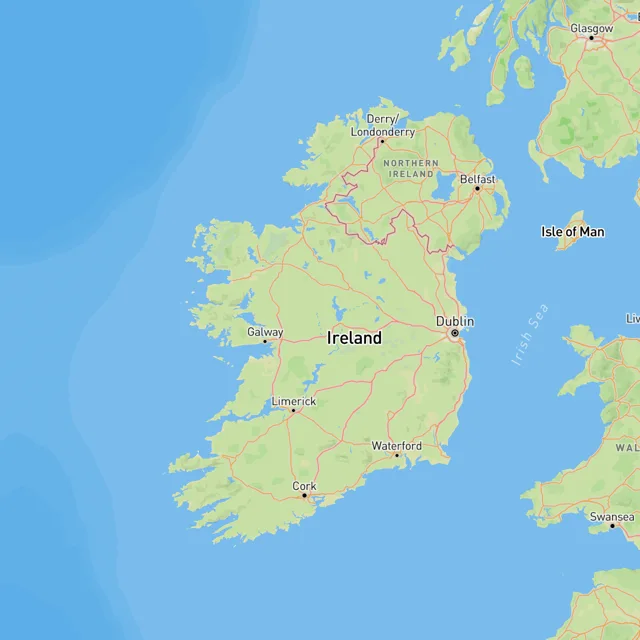

Surfing in Ireland means cool-water Atlantic waves along an exposed, deeply indented coastline that catches swell from Donegal in the northwest down to Cork and Waterford in the south. Most of the country's breaks line the west and northwest coasts, which sit open to the North Atlantic and pick up west, northwest, and southwest swell through much of the year. Because these shores face into the prevailing weather, clean offshore conditions often arrive on easterly and southeasterly winds, and many spots come alive around low and mid tide.
Beach breaks over sand make up the bulk of the waves and give Ireland its strong beginner appeal, especially along Donegal, Kerry, Cork, and Waterford. Donegal is one of the busiest surf areas, with sandy setups around Bundoran and Rossnowlagh, including Tullan Strand, that suit newer surfers when the swell is manageable. Kerry offers a similar blend of forgiving beaches and the occasional reef, with waves like Brandon Bay, Banna Beach, and Inch Reef spread around Inch and the wider peninsula.
Reef and rock-ledge waves add a more advanced dimension, most concentrated in Clare, where west and northwest swell wraps into breaks near Doolin and Lahinch such as Doolin Point and Crab Island. These reefs reward experienced surfers and clean easterly winds. Sligo mixes beach and reef, from the mellow sand of Strandhill to the heavier reefs around Easky, and it holds one of the country's best-known big-wave waves at Mullaghmore Head. Mayo stretches further variety along a long, broken coastline, with harbour and bay setups like Kilcummin Harbour and Bunatrahir Bay.
The south coast sits at a different angle. Cork and Waterford face swell arriving from the south and southwest, so beaches such as Garretstown, Inchydoney, Tramore, and Ardmore often switch on when the west-coast breaks go quiet, frequently groomed by northerly and northeasterly winds. A few counties, including Louth, Wexford, and Leitrim, have only a scattering of known spots and are best treated as local finds rather than regional hubs.
Autumn through spring is when the waves are most reliable, as stronger Atlantic swells line up while summer tends to stay smaller and less consistent. Boards range from fish and funboards for smaller beach days to longboards and shortboards as the surf builds, with dedicated guns saved for the biggest reefs. Before paddling out anywhere in the country, it pays to compare swell direction, wind, tide, season, and the character of each break, since a spot that is flat or blown out one day can turn excellent the next with only a small shift in conditions.