
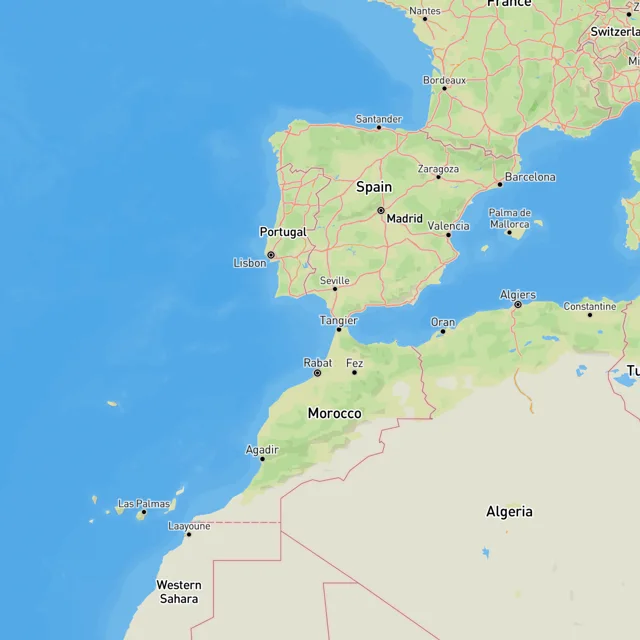

Surfing in Spain centers on the Atlantic, where a long northern coastline and a scatter of island and southern breaks give the country real variety. Most mainland surf sits along the north, where beach breaks over sand make up the bulk of the lineups and reefs and river mouths add punch where the coast allows. Waves here favor swell from the northwest, north, and west, and the cleanest days tend to arrive on southerly offshore winds. Many of these breaks work through most of the tide, with low and mid tide opening the widest window.
The north holds the country's marquee waves. In Biscay, part of the Basque Country, Mundaka is a long, hollow left that ranks among Europe's best when it lines up, with Meñakoz and Bakio nearby for heavier reef and open beach. Neighboring Gipuzkoa adds accessible town beaches like Zarautz and La Zurriola in San Sebastian. Further west, Asturias and Cantabria string together sandy beach breaks such as Rodiles near El Olivar and Santa Marina at Loredo, while Corunna reaches into exposed, swell-hungry beaches like Playa de Rodo and Bares. This stretch leans intermediate to expert and rewards surfers who can read shifting sandbars and reef.
The Cadiz coast in the southwest flips the orientation, picking up swell from the southwest and west with offshore winds out of the northeast and east. Gentle, sandy beach breaks like El Palmar near La Muela and Bolonia make this one of the more beginner and intermediate friendly corners, working best on low to mid tide.
The Canary Islands sit apart from the mainland pattern and deserve their own read. Around Las Palmas, reef breaks dominate and the standouts run heavy, with El Quemao at La Santa and Los Lobos among the names surfers travel for. Santa Cruz de Tenerife follows a similar reef-led shape but spreads its swell windows wider, taking in more northeast and east angles. Both suit surfers comfortable over reef and pick up their best energy through autumn and winter.
For any session, compare swell direction and size, wind, tide, and the character of each break rather than leaning on a single figure. Breaks here run from gentle sand-bottom beaches for learning to serious reefs and points for experienced surfers, with the northern coast generally the most powerful and consistent through autumn and winter and the south and islands offering alternatives when the Atlantic north goes flat or onshore.